How to Read and Interpret a CARFAX Report: The Complete 2025 Guide
How to Read and Interpret a CARFAX Report: The Complete 2025 Guide
Introduction: Why CARFAX Reports Are Essential for Smart Car Buying
In the world of used car buying, knowledge isn't just power—it's protection. A CARFAX vehicle history report serves as your most valuable tool against hidden problems, accident damage, and potential scams. But obtaining the report is only half the battle; knowing how to properly interpret its contents separates informed buyers from those who gamble with their investment.
This comprehensive guide will transform you from a casual report reader into a CARFAX interpretation expert. We'll break down every section, explain industry terminology, highlight critical red flags, and show you how to use this information to negotiate better deals and avoid costly mistakes.
What Exactly is a CARFAX Report?
A CARFAX report is a detailed vehicle history document compiled from thousands of data sources across North America. These sources include:
- Department of Motor Vehicles (DMV) records from all 50 U.S. states and Canadian provinces
- Police reports and accident databases
- Insurance companies claims data
- Auto dealerships and service centers
- Auction houses and vehicle inspection services
- Manufacturer recalls and warranty information
The report provides a chronological timeline of a vehicle's life, offering insights that a visual inspection could never reveal.
Section 1: Understanding the Report Structure - The Big Picture
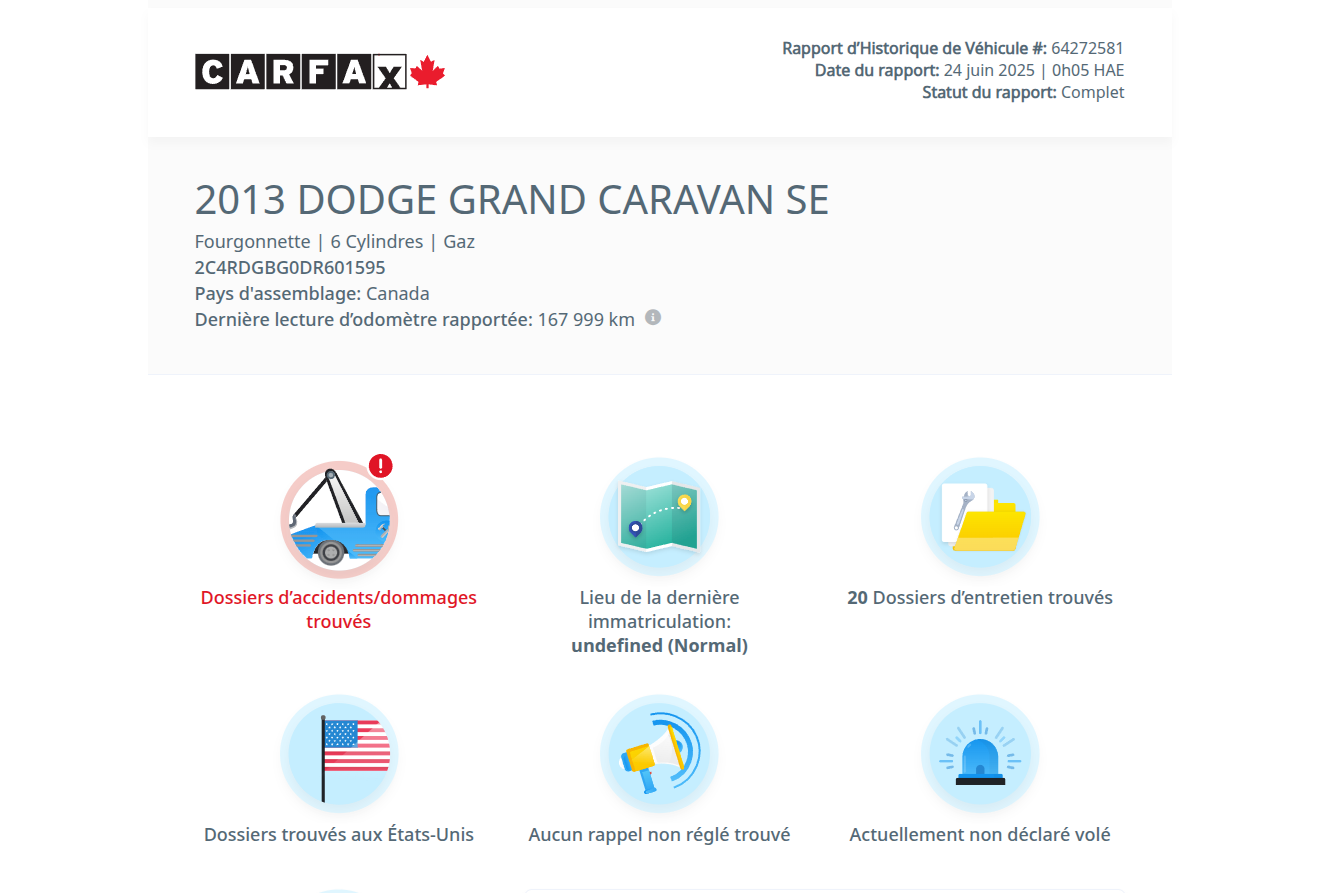
The Vehicle Summary Section
The top of every CARFAX report features a quick-glance summary that gives you immediate insights into the vehicle's overall history. This section typically includes:
- Number of Owners: More owners isn't necessarily bad, but frequent changes can indicate persistent problems
- Service History Records: The quantity of recorded maintenance events
- Accident Reports: Total number of damage incidents reported
- Title Information: Clean title vs. branded titles (salvage, rebuilt, etc.)
- Odometer Readings: Verification of mileage consistency
Pro Tip: A vehicle with 1-2 owners and regular service records is often more desirable than one with multiple short-term owners and sparse maintenance history.
The Timeline View
CARFAX organizes information chronologically, allowing you to see the vehicle's complete history at a glance. Each entry includes dates, mileage readings, and the type of event recorded.
Key Insight: Look for patterns in the timeline. Regular service entries every 8,000-12,000 km suggest proper maintenance, while long gaps might indicate neglect.
Section 2: Decoding the Title History - Your Vehicle's Legal Background
What "Clean Title" Really Means
A clean title indicates the vehicle has never been declared a total loss by an insurance company. However, "clean" doesn't guarantee perfection—it only means no major damage has been reported to authorities.
Important Distinction: A clean title vehicle can still have significant accident history if repairs were paid out-of-pocket rather than through insurance claims.
Red Flag Titles to Avoid
🚩 Salvage Title
- Definition: The vehicle was damaged to the extent that repair costs exceeded its value
- Risk Level: Extreme
- Why Avoid: Structural integrity may be compromised, resale value plummets
🚩 Rebuilt Title
- Definition: A salvage vehicle that has been repaired and passed state inspection
- Risk Level: High
- Considerations: Only for experienced buyers willing to accept significant risk
🚩 Flood Damage Title
- Definition: Vehicle has water damage exceeding specific thresholds
- Risk Level: Extreme
- Hidden Dangers: Electrical issues, mold, corrosion that may not appear immediately
🚩 Lemon Law Title
- Definition: Manufacturer has repurchased the vehicle due to unresolvable defects
- Risk Level: High
- Concerns: Persistent mechanical issues that even dealers couldn't fix
Title Washing: How to Spot This Scam
Title washing occurs when a vehicle with a branded title (like salvage) is moved between states to obtain a clean title. Watch for:
- Multiple title transfers in short periods
- Vehicle history that jumps between states with different disclosure laws
- Inconsistent title brands across different records
Section 3: Accident and Damage History - Reading Between the Lines
Understanding Damage Severity Categories
CARFAX categorizes damage into several severity levels:
Minor Damage
- Characteristics: Cosmetic issues, small dents, scratched paint
- Impact on Value: 5-15% reduction
- Action Plan: Use as negotiation leverage, but don't necessarily walk away
Moderate Damage
- Characteristics: Replacement of body panels, bumper repairs
- Impact on Value: 15-30% reduction
- Action Plan: Require professional inspection of repaired areas
Severe Damage
- Characteristics: Frame damage, airbag deployment, structural repairs
- Impact on Value: 30-50% reduction or more
- Action Plan: Typically avoid unless priced accordingly and thoroughly inspected
Structural Damage
- Characteristics: Damage to the vehicle's frame or unibody
- Impact on Value: 50%+ reduction
- Action Plan: Avoid in most circumstances due to safety concerns
The Importance of Repair Quality
A properly repaired vehicle can be a good value, but poor repairs create ongoing problems. Look for these indicators of quality work:
- Repairs performed at reputable body shops
- Multiple follow-up inspections
- OEM (Original Equipment Manufacturer) parts rather than aftermarket
- Detailed repair descriptions in the history
Multiple Accident History: When to Walk Away
While a single minor accident might not be problematic, multiple incidents—even minor ones—should raise concerns:
- Pattern of accidents may indicate careless owners
- Cumulative damage can affect vehicle integrity
- Resale value suffers significantly with each additional accident
Section 4: Service and Maintenance Records - The Vehicle's Health Diary
What Constitutes Good Maintenance History?
Ideal service records show:
- Regular oil changes every 8,000-12,000 km
- Scheduled maintenance according to manufacturer recommendations
- Documentation of major services (timing belt, transmission fluid, etc.)
- Consistent maintenance facility use (suggests careful ownership)
Red Flags in Service History
🚩 Extended Service Intervals
- Oil changes exceeding 16,000 km
- Missing scheduled maintenance events
- Long gaps between service records
🚩 Inconsistent Maintenance Patterns
- Frequently changing service providers
- Irregular service intervals
- Missing major service kmtones
🚩 Only Minimal Maintenance
- Records show only oil changes, no other services
- Missing manufacturer-recommended services
- No records of wear item replacements (brakes, tires, etc.)
How to Interpret Maintenance Facility Types
- Dealership Service: Often indicates proper maintenance with OEM parts
- Independent Specialists: Can indicate knowledgeable care, especially for luxury brands
- Quick-Lube Shops: May suggest minimal maintenance approach
- No Records: Biggest red flag—assume worst-case scenario
Section 5: Odometer Verification - Protecting Against Fraud
How Odometer Fraud Occurs
Odometer rollback is one of the most common used car scams. Fraudsters reduce mileage readings to:
- Make vehicles appear newer
- Command higher prices
- Hide true wear and tear
Reading Odometer History on CARFAX
CARFAX tracks mileage readings from multiple sources:
- Service records
- Inspection stations
- Registration events
- Emissions testing
Look for consistent, gradual increases in mileage. Typical annual mileage is 15,000 to 20,000 km.
Spotting Odometer Discrepancies
Example of Suspicious Pattern:
- January 2020: 45,000 km (service record)
- March 2021: 82,000 km (registration)
- June 2021: 58,000 km (service record) 🚩 ALERT: Rollback suspected
Proper Pattern:
- January 2020: 45,000 km
- March 2021: 58,000 km
- June 2021: 62,000 km
What to Do If You Suspect Odometer Fraud
- Walk away immediately
- Report to authorities if you've already purchased
- Verify with additional documentation if possible
Section 6: Ownership History - Reading the Story of Previous Owners
What Ownership Patterns Reveal
Single Owner Vehicles
- Advantages: Often better maintained, complete history
- Considerations: Verify maintenance was actually performed
Multiple Owner Vehicles
- Analysis Needed: Look at ownership duration
- Red Flag: Very short ownership periods (less than 1 year)
Fleet or Rental Vehicles
- Characteristics: Multiple service records in short timeframes
- Considerations: Often well-maintained but may have higher wear
Lease Vehicles
- Characteristics: Typically 2-4 year ownership, dealer maintenance
- Advantages: Usually well-maintained per lease requirements
Geographic History Matters
Vehicle location can reveal important information:
- Northern States/Provinces: Potential rust issues from road salt
- Coastal Regions: Possible corrosion from salt air
- Urban vs. Rural: Different wear patterns (stop-and-go vs. highway km)
Section 7: Recall Information - Safety Issue Awareness
How Recalls Affect Vehicle Value
Open recalls don't necessarily reduce value since repairs are typically free, but they indicate:
- Potential safety issues
- The need for immediate attention
- Possible manufacturer defects
Checking Recall Status
- CARFAX shows both open and completed recalls
- Verify completed recalls were actually performed
- Check manufacturer websites for latest recall information
Section 8: Special Sections for Specific Vehicle Types
Commercial Use Indicators
Look for these signs of commercial use:
- "Commercial" designation on registration
- High annual mileage
- Multiple service records in short periods
Police or Emergency Vehicle Use
These vehicles often have:
- Extreme duty cycles
- Idle hours that don't reflect in mileage
- Special equipment modifications
Taxi or Ride-Sharing Use
Typically shows:
- Very high mileage
- Frequent maintenance
- Interior wear beyond normal expectations
Section 9: Using CARFAX Information for Negotiation
Calculating Value Impact
Use this rough guideline for value adjustments:
- Minor accident: 5-15% price reduction
- Moderate accident: 15-30% reduction
- Major accident: 30-50% reduction
- Salvage title: 50-70% reduction
- Poor maintenance history: 10-20% reduction
- Multiple owners: 5-15% reduction
Negotiation Strategies Based on Report Findings
For Accident History
"According to the CARFAX report, this vehicle had a moderate accident in 2022. Based on industry standards, this reduces the value by approximately 20%. I'm offering $XX,XXX which reflects this adjustment."
For Service Gaps
"The report shows a 24,000 km gap between oil changes from 2021-2022. This neglect could have caused engine wear that isn't visible yet. I need to account for potential future repairs in my offer."
For Multiple Owners
"With four previous owners in five years, there's increased risk of inconsistent maintenance and hidden issues. This typically reduces value by 10-15% compared to single-owner vehicles."
When to Walk Away Completely
Some issues are negotiation-enders:
- Structural damage
- Flood titles
- Odometer fraud
- Multiple severe accidents
- Lemon law buybacks
Section 10: Limitations of CARFAX Reports - What They Don't Tell You
Important Caveats Every Buyer Should Know
CARFAX reports have limitations:
- Not All Damage is Reported: Only incidents reported to insurance or authorities appear
- Timing Delays: Recent events may not yet be in the database
- Minor Incidents: Small accidents paid out-of-pocket won't appear
- Mechanical Condition: The report doesn't assess current mechanical state
- Cosmetic Issues: Paint quality, interior wear aren't documented
The Essential Companion: Professional Inspection
Always combine CARFAX analysis with:
- Thorough mechanical inspection
- Test drive under various conditions
- Visual inspection for repair quality
- Specific checks for common model issues
Section 11: Advanced CARFAX Interpretation Techniques
Reading Between the Lines: Hidden Clues
Timeline Gaps Analysis
- Missing 6-12 months of records? Possible storage or problems
- Sudden mileage jumps? Could indicate odometer issues
- Service pattern changes? May signal new ownership approach
Geographic Movement Patterns
- Frequent state changes? Possible title washing
- Movement to/from flood areas? Enhanced flood risk
- Northern to southern movement? Check for rust issues
Service Facility Changes
- Dealership to quick-lube shifts? May indicate cost-cutting
- Consistent specialist use? Suggests knowledgeable ownership
Correlation Analysis: Connecting the Dots
Look for connections between different report sections:
- Accident followed by ownership change? Previous owner may have dumped problem vehicle
- Recall followed by sale? Owner might have avoided repair responsibility
- High mileage with minimal maintenance? Recipe for future problems
Section 12: CARFAX vs. Alternative Vehicle History Reports
Comparing Services
While CARFAX is the most recognized, other services offer different advantages:
- AutoCheck: Often better for auction vehicles
- VinAudit: Lower cost alternative
- NICB: Free stolen vehicle check
- Manufacturer Certifications: Brand-specific history
When to Get Multiple Reports
Consider additional reports when:
- Buying high-value vehicles
- CARFAX has limited information
- Suspecting title washing
- Purchasing from questionable sources
Frequently Asked Questions (FAQ)
Q: How accurate are CARFAX reports?
A: CARFAX reports are highly accurate for reported information, but they only include data that has been submitted to their sources. Unreported incidents won't appear.
Q: Can a clean CARFAX report guarantee a good vehicle?
A: No. A clean report means no major reported issues, but it doesn't guarantee mechanical soundness or absence of unreported problems.
Q: How far back does CARFAX history go?
A: Typically 10-20 years, depending on vehicle age and record availability. Older vehicles may have sparse history.
Q: What if the CARFAX report has very little information?
A: Sparse history can indicate limited reporting rather than a problem vehicle. However, it also means less verification of the vehicle's background.
Q: Can CARFAX reports be faked or altered?
A: While extremely rare, report fraud can occur. Always verify information through multiple sources when possible.
Q: How often is CARFAX updated?
A: Updates occur regularly as new data is received from sources, but there can be delays of several weeks for recent events.
Q: Are there any vehicles that won't have CARFAX reports?
A: Very old vehicles, recent imports, or vehicles with consistently unrepaired history may have limited or no CARFAX data.
Conclusion: Becoming a CARFAX Expert
Mastering CARFAX report interpretation takes your used car buying from gambling to informed decision-making. Remember these key takeaways:
- CARFAX is a tool, not a guarantee - Use it as part of a comprehensive evaluation process
- Context matters - Interpret findings in relation to the specific vehicle and price
- Negotiation power - Use legitimate concerns as leverage for better pricing
- Know when to walk away - Some issues simply aren't worth the risk
- Professional inspection is non-negotiable - No report replaces hands-on mechanical evaluation
By applying the techniques outlined in this guide, you'll approach every used vehicle with confidence, armed with the knowledge to spot potential problems and the wisdom to make smart purchasing decisions.
Ready to put your CARFAX interpretation skills to the test? Get your comprehensive vehicle history report today and make your next car purchase with confidence.
Note: This guide provides general information about CARFAX report interpretation. Always consult with automotive professionals for specific vehicle evaluations.
Prêt à vérifier un véhicule ?
Obtenez votre rapport CARFAXGO et achetez en toute confiance.
Voir nos forfaits